


Navigating challenges, embracing small wins, and building the mindset to grow something meaningful.
A reflection on our startup journey at Nursetech—sharing the lessons, challenges, and mindset shifts...
Learn More


We are a nurse-led healthcare organization dedicated to bridging the gap in medical skills, providing professional home care, and fostering wellness across Nepal through ethical and clinical excellence.



The transition from the clinical setting of childbirth to the domestic environment of the home represents the most precarious phase of the maternal and neonatal journey in Nepal. As the country navigates the complexities of the mid-2020s, a significant paradox has emerged in its public health landscape: while institutional delivery rates have reached an unprecedented 90.5 percent, maternal and neonatal mortality remains alarmingly high, indicating that the mere presence of a facility-based birth does not guarantee survival or long-term health. The following analysis explores the structural, cultural, and clinical dimensions of postpartum care in Nepal, specifically within the urban context of Kathmandu, to determine whether current interventions are sufficient and how emerging roles, such as the postpartum doula, can be integrated with professional nursing to close the pervasive care gap.
The narrative of Nepali maternal health over the last three decades is one of aggressive policy intervention and rapid behavioral shifts. The implementation of the Aama Program in 2009, which removed financial barriers to institutional delivery and provided cash incentives for antenatal and postnatal checkups, transformed the landscape of birth in Nepal. By 2025, the institutional delivery rate soared to 90.5 percent from a mere 18 percent in 2009. However, this institutionalization has not translated into a linear decline in maternal deaths at the expected rate.
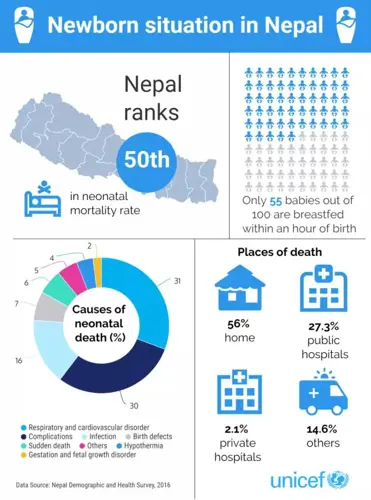
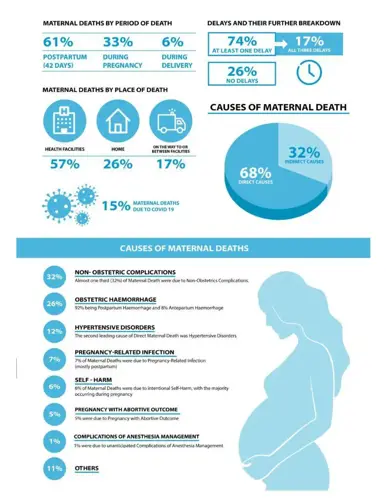
The stagnation of neonatal mortality, which has remained locked between 17 and 21 deaths per 1,000 live births for nearly a decade, highlights a failure in the "fourth trimester"—the weeks immediately following delivery. Research indicates that nearly 70 percent of maternal deaths occur due to preventable causes such as postpartum hemorrhage, infection, and hypertensive disorders, many of which manifest after the mother has been discharged from the facility.
A critical vulnerability in the Nepali system is the erosion of healthcare contact after delivery. While 85 percent of women now attend at least four antenatal care (ANC) visits, less than half—approximately 44 percent—complete the recommended three postnatal care (PNC) checkups. This "PNC gap" is where the most significant risks reside. The World Health Organization (WHO) and the Nepali Ministry of Health mandate checkups within 24 hours, on day 3, and on day 7, yet many mothers are discharged within 24 hours of a normal delivery and never receive a professional follow-up visit at home.
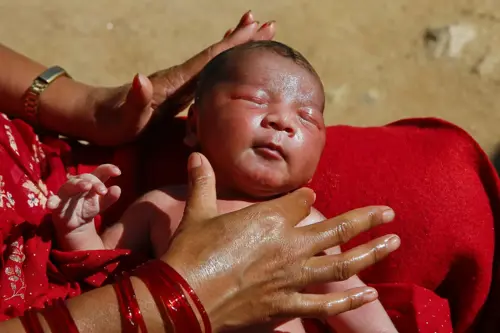
The question of whether more must be done to support mothers and babies in Nepal is answered by the data on home care. When mothers and babies are sent home after a successful delivery, they are frequently entering a "care void" where clinical monitoring is replaced by traditional supervision that may not be equipped to recognize medical danger signs. In rural areas, the preference for home births and traditional healers still accounts for 20.5 percent of deliveries in regions like Madhesh, contributing heavily to the ongoing mortality rates.
Factors Contributing to the Post-Discharge Care Gap
The inadequacy of care in the home environment is not solely a product of individual choice but of systemic and environmental barriers.
Even in urban centers like Kathmandu, where accessibility is theoretically higher, mothers often lack the necessary educational support to manage breastfeeding complications, wound hygiene (for C-sections), or neonatal jaundice. The focus of the healthcare system has historically been on the event of birth rather than the process of recovery. Consequently, mothers are getting enough "medical intervention" during labor but insufficient "nurturing care" during the vulnerable weeks that follow.
The difference in maternal outcomes between Nepal and developed nations such as the United Kingdom or the Netherlands is not only a matter of advanced technology but of the structure of community-based support. In many developed countries, the postpartum period is treated as a medically managed transition rather than a domestic event.
In the Netherlands, every new mother is entitled to Kraamzorg, a system of in-home maternity care provided for the first eight to ten days after birth. The maternity care assistant (MCA) performs clinical tasks such as monitoring the mother's uterine involution and the baby’s weight gain, but also provides breastfeeding guidance and light housekeeping. This holistic approach ensures that 95 percent of Dutch women receive extensive postpartum care, contributing to some of the lowest infant mortality and C-section rates globally.
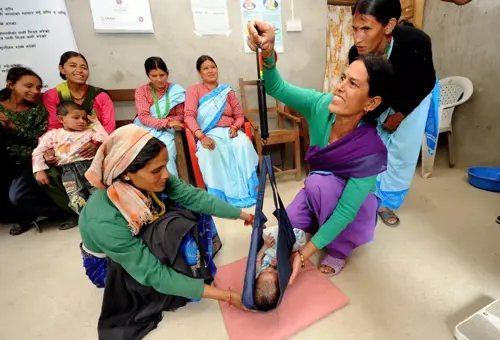
In Nepal, the equivalent level of care is only available to the wealthy through private nursing agencies in Kathmandu, costing between NPR 3,000 and 6,000 per day. For the vast majority, the only professional contact after discharge is the potential visit of a Female Community Health Volunteer (FCHV), whose training is valuable but often lacks the depth required to manage complex postpartum clinical needs.
A critical identified need in the Nepali healthcare system is the "humanization" of the postpartum experience. While nurses provide essential clinical oversight, they are often overburdened in hospital settings and unable to provide the continuous emotional and practical support that a new mother requires. This is where the role of the trained postpartum doula becomes essential.
A postpartum doula is a non-medical professional trained to support the family during the "fourth trimester". Unlike a nurse, a doula’s primary focus is on the well-being of the mother and the family’s adjustment. Their presence has been shown to reduce rates of postpartum depression (PPD) and anxiety by 40 to 50 percent.
In Kathmandu, where traditional joint family structures are increasingly giving way to nuclear families, the doula fills the role of the "experienced elder" or "sister," but with the added benefit of evidence-based training.
For optimal care in the Kathmandu Valley, a combined model where a nurse and a postpartum doula work in tandem provides the most comprehensive safety net.
This integrated model addresses the "clinical gap" through the nurse and the "nurturing gap" through the doula. Agencies like Kafal Care and MedEx are beginning to adopt this hybrid approach, recognizing that medical safety alone is not enough for a thriving recovery.
A central theme in the user query is whether traditional Nepali practices are scientifically sound or if they need to be aligned with modern care science. The "Sutkeri" period, typically lasting 40 days, is a complex tapestry of rituals that serve both protective and symbolic functions.
The practice of maternal seclusion (keeping the mother and baby in a separate room for 3 to 11 days) is often viewed as a ritualization of "impurity". However, from an epidemiological perspective, this seclusion acts as a primitive quarantine. By limiting the number of visitors and reducing the mother's exposure to the community, the family effectively lowers the risk of neonatal infection and allows the mother's immune system to recover.
Scientific Alignment: The core concept of rest and limited exposure is highly beneficial.
Scientific Conflict: The perception of ritual pollution can lead to the neglect of hygiene or delays in seeking medical help if the mother is prohibited from leaving the "polluted" space to visit a clinic.
The tradition of oil massage is nearly universal in Nepal, with mustard oil being the preferred choice for 99 percent of newborns.
The Case for Mustard Oil: In mothers, warm mustard oil massage has been proven to significantly reduce postpartum back pain through thermogenic and circulatory stimulation. For healthy, full-term infants, it provides essential warmth and aids in sleep.
The Case for Sunflower Oil: For preterm or low-birthweight (LBW) infants, research in Sarlahi, Nepal, demonstrates that mustard oil can be detrimental to the skin barrier. Sunflower seed oil (SSO), which contains high levels of linoleic acid (C18H32O2), has been found to accelerate skin barrier repair, reduce transepidermal water loss (TEWL), and lower the risk of hospital-acquired infections.
Recommendation: Alignment with care science would suggest a transition to sunflower oil specifically for preterm or vulnerable infants while acknowledging the benefits of mustard oil for maternal recovery and healthy term babies.
The diet prescribed for a postpartum mother in Nepal—heavy in Sutkeri Masala or Battisa—is exceptionally well-aligned with modern nutritional science. This blend of 32 herbs and spices acts as a concentrated nutrient supplement.
This traditional "superfood" addresses postpartum anemia and the extreme caloric demands of lactation. Products like "Mom's Delight Satu" demonstrate how traditional wisdom can be modernized for the fast-paced urban lifestyles of Kathmandu.
One of the most significant care gaps in Nepal is the neglect of maternal mental health. Postpartum depression (PPD) affects between 15.6 and 19.8 percent of Nepali women, making maternal suicide a leading cause of death for women of reproductive age.
Stigma remains the primary barrier to care. Traditional superstitions often attribute postpartum melancholy to "malevolent powers" or spiritual attacks rather than physiological or psychological shifts. This leads families to seek help from dhami-jhankris (faith healers) rather than psychiatric professionals.
The opening of the Mental Health Outpatient Unit at Paropakar Maternity and Women's Hospital in late 2024 represents a critical shift toward clinical integration. However, universal screening remains rare in private hospitals. A trained postpartum doula or a nurse at home is ideally positioned to recognize the early signs of PPD—such as intrusive thoughts or detachment from the infant—and facilitate an expert referral before the condition escalates.
The ability to "do more" for mothers and babies is inextricably linked to the economic capacity of the family and the state. While the Aama Program covers delivery, the "hidden costs" of maternity care—including transportation, food for family attendants, and supplies—average over NPR 27,000 per birth, a significant burden for many.
To make doula and advanced nursing care accessible to a broader range of families, there is a need for specialized "short-term" packages (e.g., 2–7 days) that focus on the highest-risk window immediately following hospital discharge.
The evidence suggests that Nepal does indeed need to "do more," but this "more" should not be limited to medical equipment or hospital beds. It must involve the expansion of community-based, home-visiting care that integrates traditional strengths with clinical science.
Professional Certification of Doulas: Establish a national curriculum for postpartum doulas that integrates with existing CTEVT caregiver programs. This ensures a standard of care that includes both tradition (Sutkeri Masala, massage) and science (danger sign recognition, PPD screening).
The "First 48-Hour" Home Visit Mandate: All public and private facilities should be required to provide a professional home visit within 48 hours of discharge. If a nurse is unavailable, a certified doula can perform the initial check and escalate to a clinical team if necessary.
Refining Neonatal Protocols: Public health messaging must distinguish between healthy term babies (who benefit from traditional mustard oil) and preterm/LBW babies (who require sunflower oil or clinical emollients).
Universal Mental Health Screening: Use the Nepali version of the Edinburgh Postnatal Depression Scale (EPDS) at every postpartum checkup, including the six-week pediatric visit.
Subsidizing Hidden Costs: Expand the Aama Program to include vouchers for transportation and initial home-care support, reducing the financial barrier to follow-up visits.
The condition of postpartum care in Nepal is characterized by significant clinical gains in the birthing process but a dangerous disconnect in the period that follows. To close the mortality gap and meet the 2030 Sustainable Development Goals, the nation must pivot toward a care model that values the "nurturing" of the mother as much as the "delivery" of the baby. The integration of trained postpartum doulas, working in synergy with skilled nurses, provides a viable path for urban centers like Kathmandu to modernize maternal care while honoring the ancestral wisdom of the "Sutkeri" tradition. By aligning these cultural practices with evidence-based science—validating the beneficial and refining the risky—Nepal can ensure that every successful delivery leads to a healthy, supported, and thriving family.

Nepal’s premier nurse-led center for professional healthcare training, supervised home nursing, and comprehensive corporate wellness solutions.
Copyright ©Nurse Tech Skills. Powered by onetech®

